


What is mullein? History, uses and what science says
verdavita editorial team · 2026-11-09

Mullein (Verbascum thapsus) is a tall roadside plant with soft woolly leaves and yellow flowers that has been brewed as a cold-weather tea for centuries. Modern research is mostly limited to lab and animal studies, so it is best seen as a traditional herb, not a proven treatment.
What is mullein?
Common mullein (Verbascum thapsus) is a tall biennial plant with soft, woolly grey-green leaves and a single flower spike covered in small yellow flowers. In its first year it forms a low rosette of felt-like leaves. In its second year it sends up a stalk that can grow taller than a person, flowers, sets seed and dies. A single plant can produce well over 100,000 seeds, which can stay viable in the soil for decades.
Where does mullein grow?
Mullein is native to Europe and Asia. Settlers brought it to North America, where it spread quickly along roadsides, railway embankments, pastures and other disturbed, sunny ground. Today it grows in every U.S. state.
How has mullein been used in the past?
People found uses for almost every part of the plant. Dried stalks were dipped in tallow and burned as torches, which gave mullein folk names like candlewick and hag's taper. The soft leaves were placed in shoes for warmth. Mullein leaf and flower tea became a common household drink in cold weather, and the leaves and flowers were listed in the U.S. National Formulary, a standard reference for pharmacists, in the early 20th century before being dropped again.
What does science say about mullein today?
Most modern research on mullein comes from laboratory and animal studies that look at compounds such as saponins, flavonoids and mucilage. Large, well-designed human trials are still missing. That means mullein is best described honestly: a plant with a long history of traditional use and a good safety record as a food-grade herb, not a proven treatment. Claims that mullein "clears your lungs in 7 days" are not backed by clinical studies.
Why does peppermint feel so cooling?
Many mullein products are combined with peppermint or menthol. Menthol activates the same cold receptors (TRPM8) in the nose and mouth that cold air does. Researchers at Cardiff University found that menthol did not change measured nasal airflow, yet most people clearly felt the air flowing more freely. The cool, open sensation is a genuine sensory effect, which is why peppermint tea and menthol lozenges feel so good on a cold day.
Mullein tea, capsules, gummies or drops: what is the difference?
Mullein comes in several forms. Tea is the traditional way: steep dried leaves and strain carefully, because the fine hairs can irritate the throat. Capsules contain dried leaf powder or extract and are tasteless. Gummies are convenient but usually contain sugar and small amounts of herb. Liquid drops are easy to dose, can be taken straight or stirred into a drink, and oil-based drops are alcohol-free. Whatever form you choose, check the Supplement Facts panel for the actual amount per serving and whether the product uses a proprietary blend.
How can you use mullein drops in everyday life?
- Morning tea: stir the daily serving into a cup of warm (not boiling) tea with honey and lemon.
- Mint water: add the drops to a glass of water with a few fresh mint leaves and a slice of orange.
- Straight from the dropper: the quickest option if you like a strong peppermint taste.
- Same time every day: tie it to a habit you already have, such as your first coffee.
Is mullein safe?
Mullein is generally considered safe as a food-grade herb, but supplements are not for everyone. Ask your doctor first if you are pregnant or nursing, take medication, or have a medical condition. Peppermint oil can make heartburn (GERD) worse. Most importantly, a cough that lasts longer than three weeks, shortness of breath, chest pain or coughing up blood need a doctor, not a supplement.
Our mullein drops
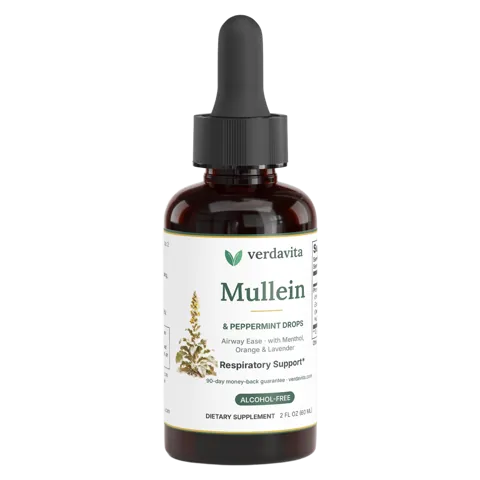
If you would like to try mullein as part of a morning routine, our Mullein & Peppermint Drops combine mullein oil with peppermint, menthol, orange peel and lavender oils in an alcohol-free MCT oil base. The full label is on the product page, including the fact that the oils come as one 400 mg proprietary blend.
Products mentioned
Sources
- Verbascum thapsus (Wikipedia)
- King's American Dispensatory / U.S. Dispensatory: Verbascum
- Eccles R. et al.: menthol and nasal sensation of airflow (PubMed)
- Eccles R.: menthol effects on nasal sensation of airflow (PubMed)
General information, not medical advice. Images are illustrative.