


Omega-3 vs. fish oil: what is the difference?
verdavita editorial team · 2026-11-05

Omega-3s are a group of fatty acids, and fish oil is one type of supplement that contains them. On the label, look at the EPA and DHA amounts, not only the total fish oil.
The three main omega-3s
The NIH names three: ALA, EPA and DHA. ALA is found mainly in plant oils such as flaxseed, soybean and canola oils. DHA and EPA are found in fish and other seafood.
Read past the big number
The largest number on a fish oil label is often the total oil. The EPA and DHA lines show how much of those omega-3s you get.
Medication
The NIH says omega-3 supplements may cause bleeding problems when taken with warfarin or other anticoagulants. If you take one, talk to your doctor first.
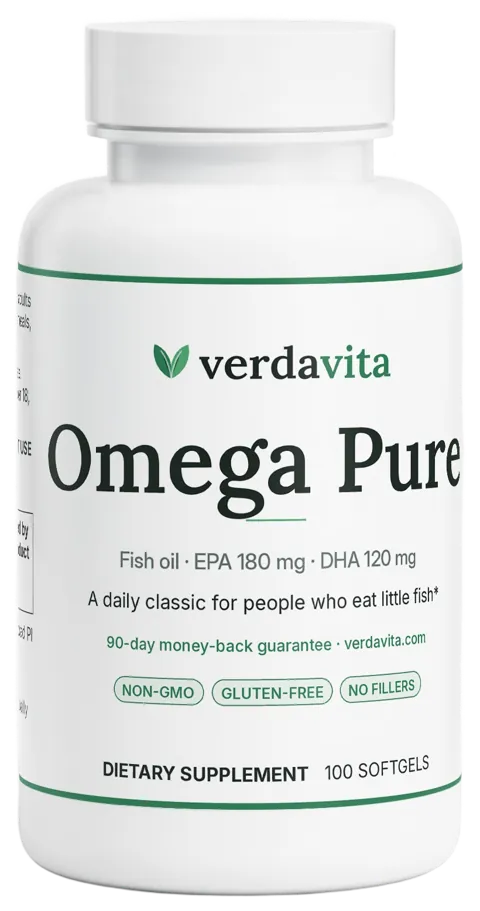
Omega Pure lists 180 mg EPA and 120 mg DHA per softgel, and the label names the fish it comes from.
Products mentioned
Sources
General information, not medical advice. Images are illustrative.